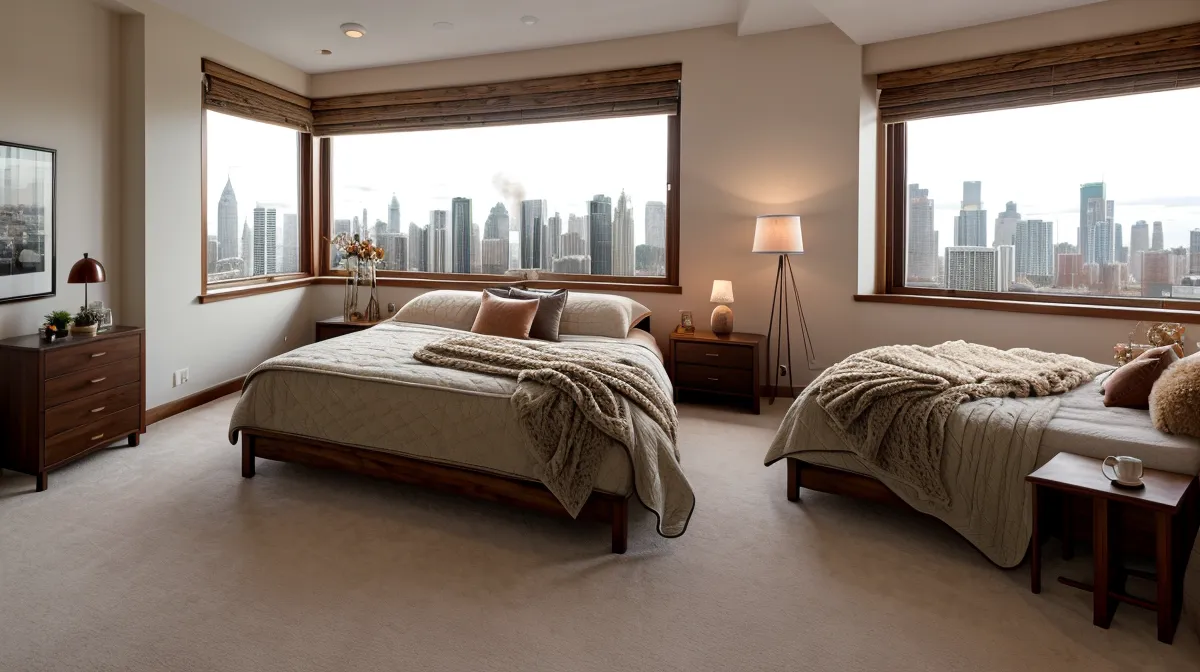
One evening late this past February, I was sitting on the edge of my bed trying to finish a strategy brief that was due the next morning. My brain was buzzing, my eyes felt like they were vibrating, and the overhead LEDs in my bedroom felt less like 'home lighting' and more like interrogation lamps. I was physically exhausted, but my nervous system was convinced we were in the middle of a high-stakes Q3 planning session under the midday sun. That was the moment I realized my 'wind down' routine was a complete lie.
I’m a marketing director in San Francisco. My life is basically a series of back-to-back Zoom calls, Slack notifications, and the perpetual hum of a city that never really turns off. For years, I wore my 3 AM sleep-deprived emails like a badge of honor, until I literally fell asleep during a client presentation. Talk about rock bottom. Since then, I’ve been on a mission to fix my sleep without quitting my job—because, let’s be real, the bills still need to be paid. I’ve tried the apps, the teas, and the various supplements that promise to shut your brain off, but I kept overlooking the very environment I was living in.
The 5000K Interrogation Room
Here is the thing: we are biological creatures living in a digital, electrified world. My bedroom was outfitted with standard 'daylight' LED bulbs. In the lighting industry, these are usually around 5000 Kelvin. They are great for a kitchen when you’re chopping vegetables or a workspace where you need to be sharp, but they are a catastrophe for a bedroom. By bathing myself in that 5000 Kelvin glow until the very second I hit the pillow, I was essentially telling my brain it was high noon, then expecting it to pivot to deep sleep in five minutes. It’s like trying to stop a freight train with a toothpick.
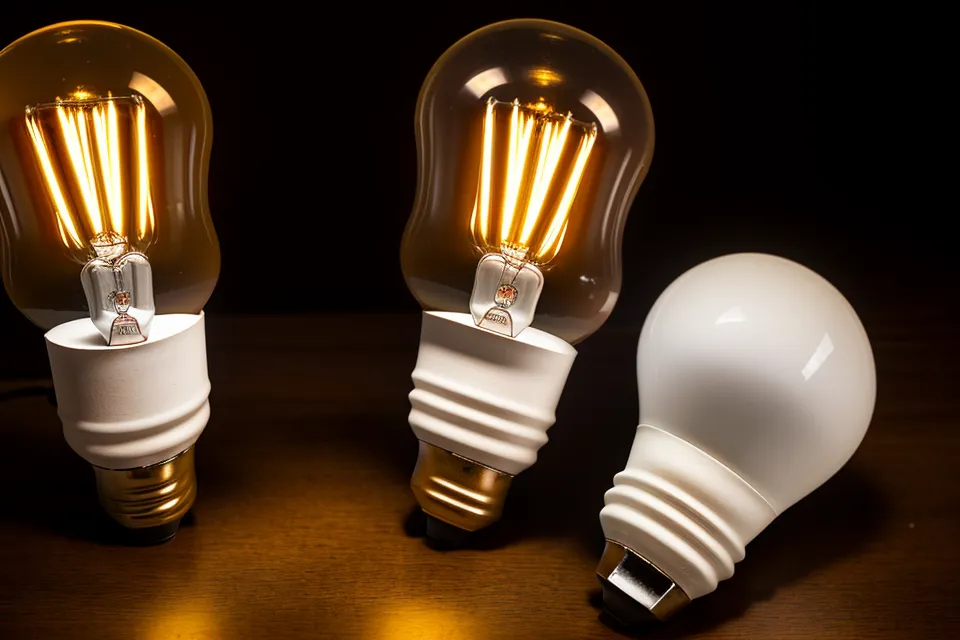
Look, I have zero medical training. I’m just a professional who got tired of being tired. But when I started looking into the visible light spectrum—which technically ranges from 380 to 700 nanometers—I realized I was drowning in the wrong end of it. Specifically, the blue light wavelength peak, which sits between 450 to 495 nanometers, is the exact frequency that tells our brains to stop producing melatonin. By keeping those bright white LEDs on while I 'relaxed' with my laptop, I was manually overriding my body's natural sleep signals.
The Great Bulb Swap of April
In early April, I decided to do a full lighting audit. I didn’t just buy 'warm' bulbs; I went looking for specific amber-hued LEDs designed to filter out wavelengths below 500 nanometers. I replaced the bedside lamps, the hallway lights, and the reading light in my favorite armchair. The goal was to eliminate the blue light triggers entirely after the sun went down. I wanted my apartment to feel like a sunset, not a laboratory.
The first night I turned them on, the shift was visceral. The way the bedroom shifted from a sterile hospital-wing vibe to a soft, campfire glow made my jaw finally unclench. It was a sensory reset I didn't know I needed. The color temperature of these bulbs is much closer to a candle flame, which usually sits around 1850 Kelvin. It’s warm, it’s inviting, and it’s deeply un-productive in the best way possible.

However, there was a learning curve. About three days into the experiment, I had a minor wardrobe crisis. I was trying to pick out a navy blue blazer in the amber-lit hallway for an early morning flight and realized it looked identical to my black one. Everything in the room looked like it had an 'autumn' filter applied to it. I ended up packing two mismatched socks because, under amber light, color accuracy goes out the window. Small price to pay for sanity, I suppose.
Biology Overriding Stress
After about six weeks of living in this sunset-hued world every evening, something weird happened. I was halfway through a book—a real, physical book, because I was trying to stay off my phone—and I felt a heavy-lidded, deep yawn. It wasn't the 'I'm crashing from caffeine' kind of exhaustion. It was a genuine, biological signal that my body was ready for bed. I hadn't felt that sensation without the help of a heavy-duty sleep aid in years.
The science behind this is actually pretty fascinating, even for a non-scientist. Our eyes have these things called melanopsin receptors that are specifically tuned to that 400-500nm blue light range. When they see it, they tell the brain to stay alert. By removing that stimulus, I was finally letting my internal clock do its job. It’s a passive boundary. I don’t have to 'try' to feel sleepy; the environment just stops fighting my biology. If you find yourself constantly wired, you might want to check out my strategy for quiet nights before high-stakes mornings, because lighting is only one piece of the puzzle.

The Hard Truth About Your Screen
Now, here is the reality check that most 'wellness' guides won't tell you. You can fill your house with the most expensive amber bulbs on the market, but if you spend the three hours before bed scrolling through LinkedIn or triaging your inbox on a high-resolution smartphone, the bulbs won't save you. I learned this the hard way during a particularly stressful deadline week in May. I had the amber lights on, the room looked like a cozy sanctuary, but I was hunched over my laptop for four hours straight.
The psychological stimulation of digital tasks—the hits of dopamine from emails, the blue light from the screen itself, the stress of a looming deadline—will override any circadian benefit of reduced ambient light every single time. Amber bulbs are a tool, not a magic wand. They create a container for rest, but you still have to choose to step into that container. I’ve written before about the late-night screen experiment where I finally had to unplug, and honestly, the bulbs only work if you pair them with a willingness to put the phone down.
Progress, Not Perfection
One Sunday evening in June, I sat in my living room with just the amber lamps on. The sun had been down for an hour, and the house felt quiet. My inbox was still full—it’s always full—but for the first time, I didn't feel the frantic urge to 'just check one more thing.' The light signaled that the workday was over, even if the work wasn't finished. My therapist says this is 'progress, not perfection,' and I’m inclined to agree.
I still work too much. I still have nights where I fail the screen-time test. But switching to amber bulbs has given me a physical cue that helps me transition from 'Marketing Director' to 'Human Being Who Needs Rest.' It’s a low-effort, high-reward change that doesn't require a 12-step meditation program or a complete lifestyle overhaul. Just a few new bulbs and a commitment to let the sunset happen, even inside your apartment.
If you're struggling with that 'tired but wired' feeling, talk to your own doctor or a sleep professional to make sure there isn't something else going on. For me, it was about realizing that I couldn't keep living in an interrogation room and wondering why I couldn't relax. Sometimes, the simplest fix—literally just changing the light—is the one that actually moves the needle.