
The room went dead silent. It was mid-December, during our Q4 wrap-up, and I was mid-sentence when my brain simply stopped. I was trying to talk about our multi-channel strategy, but for the life of me, I couldn’t recall the word ‘synergy.’ I just stood there, mouth slightly open, while my boss stared at me with that specific expression of polite concern that feels worse than a reprimand. It was my rock bottom.
Look, before we dive into how I clawed my way back from that boardroom freeze, a quick heads-up. This post contains affiliate links. If you buy through them, I earn a commission at no extra cost to you. I only share sleep products I have personally tested during my actual 50-hour work weeks. I’m not a doctor, a sleep coach, or a wellness influencer—just a marketing director who got tired of being a zombie. Talk to your own professional before changing your supplement routine. Full disclosure over.
For years, I treated my insomnia like a badge of honor. I thought being ‘on’ 24/7 was just part of the San Francisco tax. But by early 2026, my ‘hustle’ had morphed into a slow-motion car crash. I was fueling myself with four daily espressos and a rotating door of ineffective sleep apps that just told me things I already knew—like the fact that I wasn’t sleeping. I had that gritty, sandpaper feeling behind my eyelids at 2 PM that no amount of expensive eye drops could fix. It was miserable.
The Failed Hacks and the 4 AM Crying Fit
Before I found what worked, I tried everything that didn’t. I spent low-three-figures on a high-end weighted blanket that was supposed to ‘ground’ my nervous system. Instead, it just made me feel trapped and sweaty, leading to a full-blown 4 AM crying fit because I couldn’t even get the ‘easy’ sleep hacks right. I remember looking around my bedroom and thinking, ‘I’m literally paying for this apartment just to stare at the ceiling; I might as well be sleeping in the office.’
The problem wasn’t just the stress; it was the inconsistency. My job involves a lot of travel, and for high-travel consultants and directors, standard sleep hygiene often fails. Constant circadian rhythm shifts and the sterile, unpredictable environment of hotel rooms prevent the biological consistency required for traditional regulation. You can’t ‘dim the lights two hours before bed’ when you’re landing in a different time zone and heading straight to a client dinner.
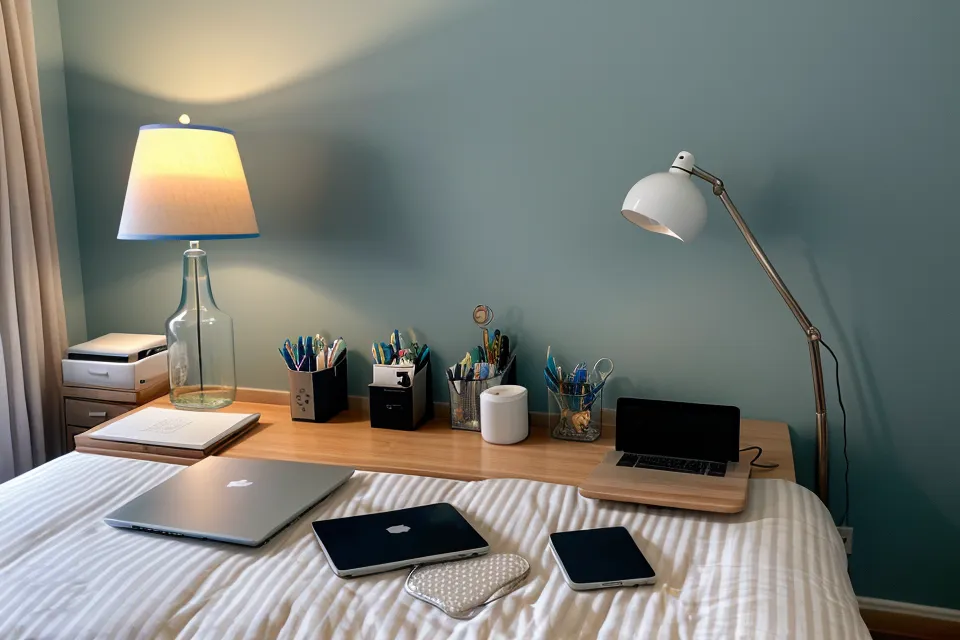
I even tried using a weighted blanket for anxiety during those late-night panic spirals about my inbox, but it just felt like another thing I was failing at. If you’ve ever felt the guilt of not being able to ‘relax’ on command while Slack notifications are pinging your nightstand, you know exactly what I mean.
The Low-Three-Figure Experiment
By early January, I knew I needed a bridge. I wasn’t ready to drop a fortune on premium longevity stacks yet, so I looked for something budget-friendly to get me through the fiscal year-end crunch. I landed on Resurge. It was around fifty bucks a bottle—a price point that didn’t make my CFO-brain wince. I committed to a four-month stabilization period, which meant four bottles for a total investment in the low-three-figures.
I wasn’t expecting a miracle. I just wanted to stop feeling like I was vibrating. During those 18 weeks between January and April, I tracked everything. I started noticing a shift around the third week. I wasn’t just passing out; I was actually staying under. My daily sleep gain averaged about two hours—moving from a frantic four-and-a-half hours to a much more human six-and-a-half hours of tracked sleep.
Over that timeline, that adds up to roughly 250 hours of extra sleep. Think about that. That’s ten full days of recovery I wouldn’t have had otherwise. While I was still using my journaling for better sleep routine to clear the 10 PM marketing brain, the supplement seemed to be doing the heavy lifting in the background.

Waking Up Without the Heart-Racing Panic
The real turning point came mid-March. I woke up just before my alarm, and for the first time in three years, I didn’t have that ‘heart-racing’ cortisol spike. Usually, I’d bolt upright, immediately thinking about my unread messages. Instead, I felt a weird, pleasant heaviness in my calves that signaled my nervous system was finally powering down and recovering for the night. It felt like my body had actually finished its ‘maintenance mode’ for the first time in a decade.
Resurge targets deep sleep (Stage 3 NREM), which is the primary period for growth hormone release and metabolic repair. For someone like me, whose cortisol levels usually spike at 3 AM because of work anxiety, having something to help anchor that deep sleep phase was a game changer. It’s an older formula, sure, and it lacks some of the bells and whistles of newer supplements, but as a budget-friendly ‘secret weapon’ for high-stress weeks, it held its own. I also started looking into how to lower cortisol levels naturally during the day to support what the supplement was doing at night.
I even managed to navigate a three-city tour in April without losing my mind. Usually, travel wrecks me, but I used a modified version of my travel routine alongside my nightly Resurge dose, and I actually stayed functional. I wasn’t zoning out in meetings; I was actually present.

Progress, Not Perfection
By early May, as the high-stress quarter finally started to level off, I realized that while Resurge was the bridge that saved my job, I was ready to level up. It’s a solid, affordable option, but I’ve started looking into higher-tier solutions for long-term recovery. My therapist says this is ‘progress, not perfection,’ and I’m inclined to agree. I still check my email before bed sometimes—old habits die hard—but the consequences aren’t as dire as they used to be.
If you’re currently in that ‘sandpaper eye’ phase and need something that won’t break the bank while you’re fighting through a deadline, Resurge is a respectable place to start. It targets the deep sleep that high-stress professionals lose first. However, if you’re looking for something with a more modern, comprehensive ingredient profile to tackle executive burnout specifically, I’ve found that YU SLEEP is the next logical step. It’s been my go-to lately for those weeks where the workload feels truly impossible.
Look, we’re all just trying to get through the week without falling asleep in a boardroom. Whether it’s a budget-friendly anchor or a premium stack like SleepLean if you’re also tracking metabolic goals, the point is just to feel human again. You don’t have to wear your exhaustion like a badge. You can just... sleep. It’s okay to prioritize that, even when the inbox is screaming.