
It was a Tuesday evening in late April, well after dark, and I was staring at a Slack notification from my VP of Growth that simply said, "Quick sync tomorrow?" My heart did that familiar, jagged little skip—the one that usually signals a three-hour ceiling-staring session. A year ago, that one message would have derailed my entire night. I would have been up until the early hours, drafting three different versions of a response in my head while my laptop screen burned my retinas.
Look, I’m a 39-year-old marketing director in San Francisco. I spent a decade wearing my sleep deprivation like a badge of honor, thinking my 'hustle' was directly proportional to how many dark circles I had under my eyes. Then came the rock bottom: falling asleep mid-sentence during a client presentation in a glass conference room. It wasn't a graceful nod; it was a full-on, head-snap-forward micro-nap. Total professional humiliation.
Heads up—this post has affiliate links. If you buy through them, I earn a commission at no extra cost to you. I only share sleep products I have personally tested during my actual 50-hour work weeks. I’m not a doctor or a sleep coach—just a professional who got tired of being tired. I have zero medical training, so please talk to your own doctor before starting any new supplement routine.
The 2026 Update: Why I’m Still Talking About This
I first started documenting my experiment with Yu Sleep about eighteen months ago, but since we’re halfway through 2026, I wanted to provide a fresh look at how this fits into a high-stress career. The market is flooded with 'miracle' pills now, but when you’re managing a team and a crushing inbox, you don't need a miracle—you need a reliable way to turn off the internal monologue.
Earlier this year, I went through a particularly brutal Q1 launch. We were pulling 12-hour days, and the 'marketing brain' was in overdrive. You know the feeling: you’re physically exhausted, but your mind is running like a browser with fifty tabs open. This is where cortisol—that lovely stress hormone—basically hijacks your system. I’ve found that Yu Sleep acts like a gentle 'close all tabs' button for my brain. It doesn't knock me out like a heavy sedative; it just makes the bed feel like a place for sleeping again, rather than a place for worrying.
The ROI of Rest: Breaking Down the Cost
When you're burning out, you start looking at everything through a return-on-investment lens. I used to justify my five-dollar oat milk lattes as 'productivity fuel.' But when I looked at the math for my sleep health, the perspective shifted. A monthly supply of Yu Sleep works out to about two-fifty a day. That’s less than half the cost of the afternoon caffeine hit I used to need just to survive my 3 PM status calls.
I’ve tested the alternatives, too. I briefly switched to SleepLean during a month when I was also trying to get back into a gym routine. It’s a solid premium option if you’re looking for that metabolism boost, but it’s pricier—around eighty bucks a bottle. On the other end, I tried Resurge for a few weeks last winter because it’s more budget-friendly, but I found the formula a bit heavy on the melatonin for my taste. It gave me that 'melatonin hangover' where I felt like I was waking up underwater.
By mid-March, after sticking with my Yu Sleep routine through the launch, I realized I hadn't hit the snooze button in three weeks. For someone who used to treat the snooze button like a religious ritual, that’s huge. It’s not just about the hours; it’s about the quality of REM sleep. I was finally waking up feeling like a functional adult rather than a reanimated corpse.
The Turning Point: Deep Sleep vs. The Groggy Fog
Here is the thing: most of us in high-pressure roles aren't just 'tired.' We are over-stimulated. I’ve written before about dealing with the 10 PM marketing brain second wind, and that’s the real enemy. You get home, you’re exhausted, but then you see one email and suddenly you’re ready to rewrite the entire Q3 strategy.
What I love about the Yu Sleep formula is that it doesn't rely on massive doses of melatonin to force you into unconsciousness. Instead, it seems to target the stress-sleep connection. Around thirty minutes after taking it, I notice a physical softening in my shoulders. The 'noise' of the day starts to recede. It’s a subtle shift, but it’s the difference between fighting for sleep and actually inviting it in.
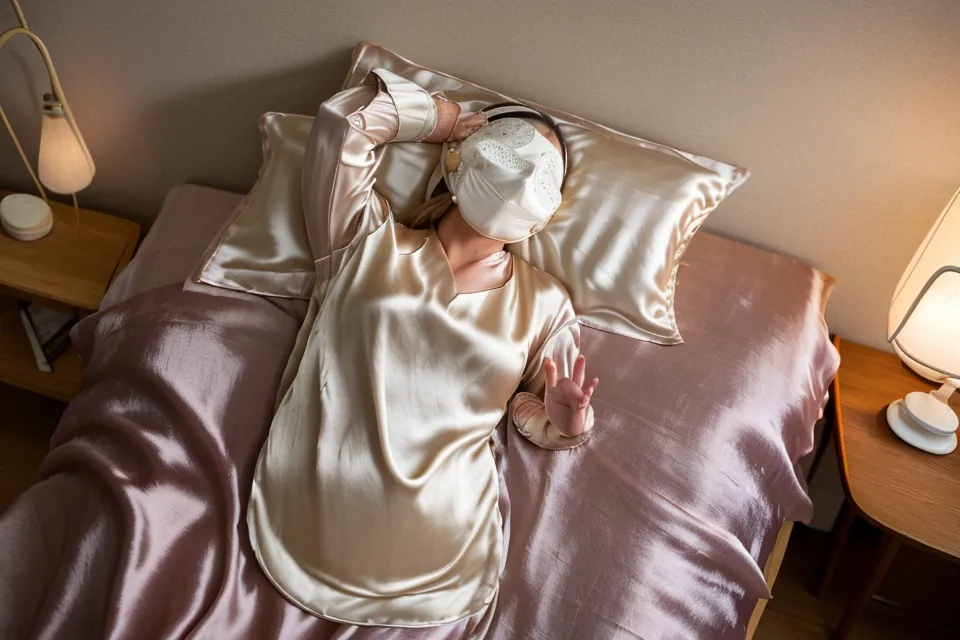
I’ve also started being much more diligent about my environment. I’m that person now—I wear blue light blocking glasses for late-night emails and I’ve learned how to build a sustainable bedtime routine that doesn't involve me quitting my job. The supplement is the anchor, but the habits are the rope. Together, they keep me from drifting back into that zombie state I lived in for most of my thirties.
The Comparison: Which One Fits Your Career?
If you’re trying to decide where to put your money, here is how I see the current 2026 landscape for busy professionals:
- Yu Sleep (The Hero Pick): This is my daily driver. It’s the most balanced for the executive-level stress where you need to be sharp the next morning. No grogginess, just genuine rest.
- SleepLean (The Premium Pick): If you’re also struggling with that 'office weight gain' from stress-eating at your desk, this is worth the extra investment. It’s a 'two birds, one stone' situation.
- Resurge (The Budget Pick): If you just need to get through a high-stress week and don't mind a slightly more aggressive formula, this is the most affordable way to force a deep sleep cycle.
Progress, Not Perfection
Does a supplement fix a toxic workplace or a 60-hour week? No. I still have nights where a deadline keeps me up. I still occasionally check my phone when I should be winding down. My therapist calls it 'progress, not perfection,' and I’m leaning into that. But the difference between my life now and my life two years ago is night and day—literally.
I no longer dread the 3 PM slump because I’m not starting the day at a deficit. If you’re currently in that cycle of caffeine and cortisol, I highly recommend giving Yu Sleep a 30-day shot. It’s about seventy bucks for a bottle, which is a small price to pay to stop feeling like you’re failing at both your job and your health. Just remember to check with a professional if your fatigue feels like something more serious than just a heavy workload.
We’re all just trying to get through the week without falling asleep in a glass box. If you can buy yourself a few hours of real, restorative rest, take it. Your inbox will still be there in the morning, but your sanity might not be if you don't start prioritizing your sleep. You’ve got this.