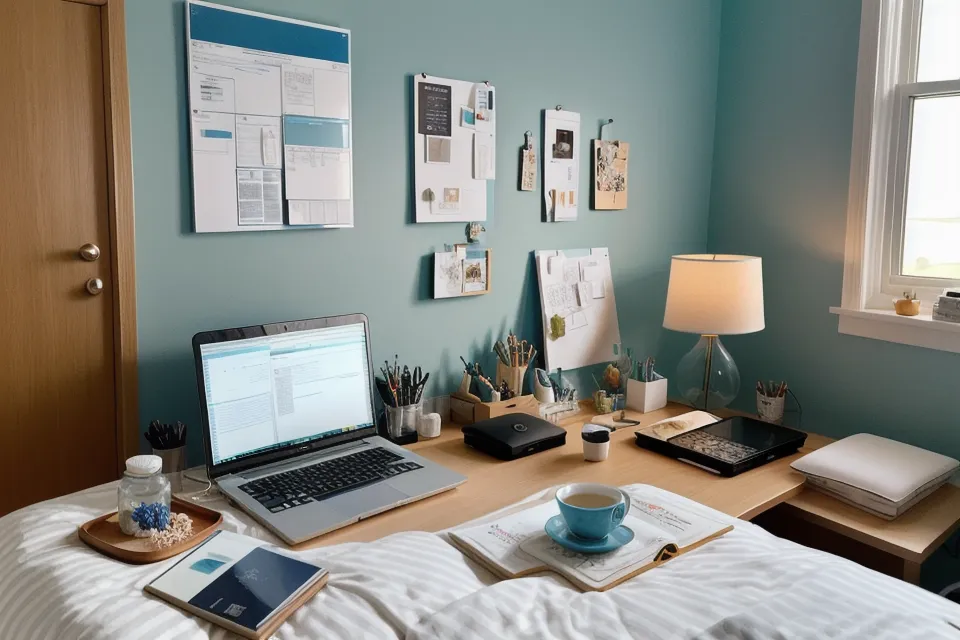
Three sleep-tracking apps lived on my phone at once, each with its own dashboard, and not one of them made me fall asleep faster. That's what marketing burnout actually looks like up close, not a dramatic collapse, just a slow habit of measuring a problem instead of fixing it.
Quick disclosure before we get into it: some of the links below are affiliate links, and if you buy through one, I earn a commission at no extra cost to you. I'm not a doctor or a sleep coach, just a marketing director who got tired of being tired, so treat anything supplement-related here as one person's experience, not medical advice.
What Actually Happens to Your Sleep During a Launch
Marketing deadlines don't spike your cortisol once and let go. They spike it in waves, every time a number moves the wrong way late in the evening, and no amount of general sleep optimization advice changes the fact that a launch week runs on adrenaline instead of rest. By the time a campaign wraps, most of us aren't just tired, we're carrying real sleep debt that doesn't clear itself just because the deadline passed. That's the piece nobody warned me about before I fell asleep mid-sentence during a client presentation and decided that was rock bottom.

A reader named Belinda Sato messaged me after that story went up, saying the exact same thing happened to her during a Zoom all-hands. She works in healthcare administration, where the schedule shifts under you without much warning, and she now sends me progress updates on her own sleep that read more like a medical chart than an email. Her questions, along with a pile of others from readers in similarly overloaded jobs, are basically what built the rest of this piece.
Does Mouth Taping Actually Help With Nighttime Breathing?
One of the most common questions I get: does mouth taping actually do anything? For me, it changed how foggy I felt in the morning more than it changed how fast I fell asleep. Breathing through the nose all night seemed to matter more than any relaxation trick I tried around the same time. It's not something I'd recommend blindly, and it's worth reading up on before trying it yourself, but it's the one habit from that whole stretch of experimenting that actually stuck.
Global Calls Wreck Sleep More Than Late Nights Ever Did
Global team calls do something worse than a single late night. They pull your body's clock out of sync with the daylight you're actually living in, a kind of social jetlag that a weekend of catching up never fully resolves. A steady wake-up time, even after a rough night, turned out to matter more than exactly when I fell asleep. That's the one habit that kept paying off once I actually committed to it. Caffeine timing plays into the same problem: the effects don't vanish an hour after the cup, they taper off slowly enough that a mid-afternoon coffee can still be working against you well into the evening.
Melatonin Worked, Until It Didn't
Melatonin was my first real attempt at fixing any of this, and for a while, it worked. Then it stopped. I needed more of it to get the same effect, and the grogginess the next morning started costing me more than the extra sleep gave back. That sent me looking for melatonin alternatives that wouldn't leave me foggy through my first two meetings of the day.
Does a Natural Sleep Supplement Like Yu Sleep Actually Move the Needle?
Here's the honest answer: a supplement isn't magic, but the right one can lower the friction enough that your other habits actually stick. Yu Sleep is what I kept reaching for once the melatonin route stopped working for me, no synthetic melatonin dependency, a formula built around natural ingredients instead, and a 60-day money-back guarantee that made trying it feel less like a gamble and more like testing a new channel with a capped budget.

Improvement wasn't instant. It built gradually instead of hitting all at once, which honestly matched how everything else about climbing out of marketing burnout went for me too. Nothing about it was a single dramatic fix.
Does Writing Everything Down Before Bed Actually Work?
A version of the classic brain dump question comes up constantly, and my answer keeps changing depending on who's asking. Early on, writing my to-do list before bed just made me more anxious. Seeing everything unfinished in one place felt like reading a bad performance review right before trying to sleep. It works better now, but only because there's less raw stress underneath it to begin with. The notebook doesn't fix an overloaded nervous system on its own, it just gives an already calmer brain somewhere to put things down instead of turning them over at midnight.
Yu Sleep or Resurge: Which One I Actually Reach For
My cabinet has both, and the honest breakdown is simple. Yu Sleep is what I reach for during an actual launch week, when I want consistent support without a synthetic hangover the next morning. Resurge is the one I pull out on nights I specifically want deeper, more restorative sleep rather than just falling asleep faster. It's been around longer, the formula hasn't changed much, and results came slower for me in general, but it earns its spot for that particular use.
Winifred Cho, a colleague who's talked me down from more workplace spirals than I'd like to admit, was the one who actually pointed out that I'd started sleeping through my alarm again. I hadn't even noticed the change myself until she said something.
The clearest sign wasn't anything a device told me. It was waking up on a Saturday before my alarm went off with no dread waiting for me, just quiet. I got up, walked over to the Ferry Building Farmers Market for coffee and produce, and made it through the entire morning without needing to crawl back into bed afterward.

Quick Answers to Everything Else Readers Ask Me
A few more questions come up often enough to answer directly. Napping at your desk after a rough night can help, but only if you keep it short. Anything longer and you wake up groggier than before you closed your eyes, which is its own tax on the rest of your afternoon. Bedroom temperature matters more than most people expect, and a room that runs warm undoes a lot of the good a quiet evening could otherwise do. Getting all of it right at once (temperature, light, sound) works better as a stacked routine than as one single fix, which is why chasing just one variable rarely moves the needle much on its own. Background noise helps some people and distracts others, so a steady layer of sound is worth testing before assuming it'll work the same way it did for a friend. Progressive muscle relaxation sounds like nothing until you actually try it mid-stress, and then it becomes obvious why it's the one technique I keep recommending to people who think meditation apps are a waste of time.
Eating a heavy meal right before bed makes falling asleep harder for reasons that have nothing to do with willpower. Alcohol after a stressful industry event knocks you out, but that's not the same thing as actual rest, and the difference shows up in how wrecked you feel the next morning even after a full night in bed. Closing the laptop before your body actually starts settling in for the night matters more than which supplement you take, and stress hormones don't drop the moment you decide it's bedtime. They ease off gradually, on their own schedule, whether your inbox is empty or not. None of this replaces the deeper repair work your body does in its own sleep stages overnight, which is really a separate conversation from any single habit fix.
Treat Recovery Like a Real Line Item
You don't have to fall asleep in front of a client to decide rest deserves a real budget instead of whatever time is left over after everything else gets paid first. Pick the habit that matches your actual problem instead of copying someone else's entire routine, and give it more than one bad night before deciding it doesn't work.
If a natural supplement is part of what you're testing, Yu Sleep is worth a look, the guarantee alone makes it a lower-risk trial than most of what marketers sign off on in a normal quarter.